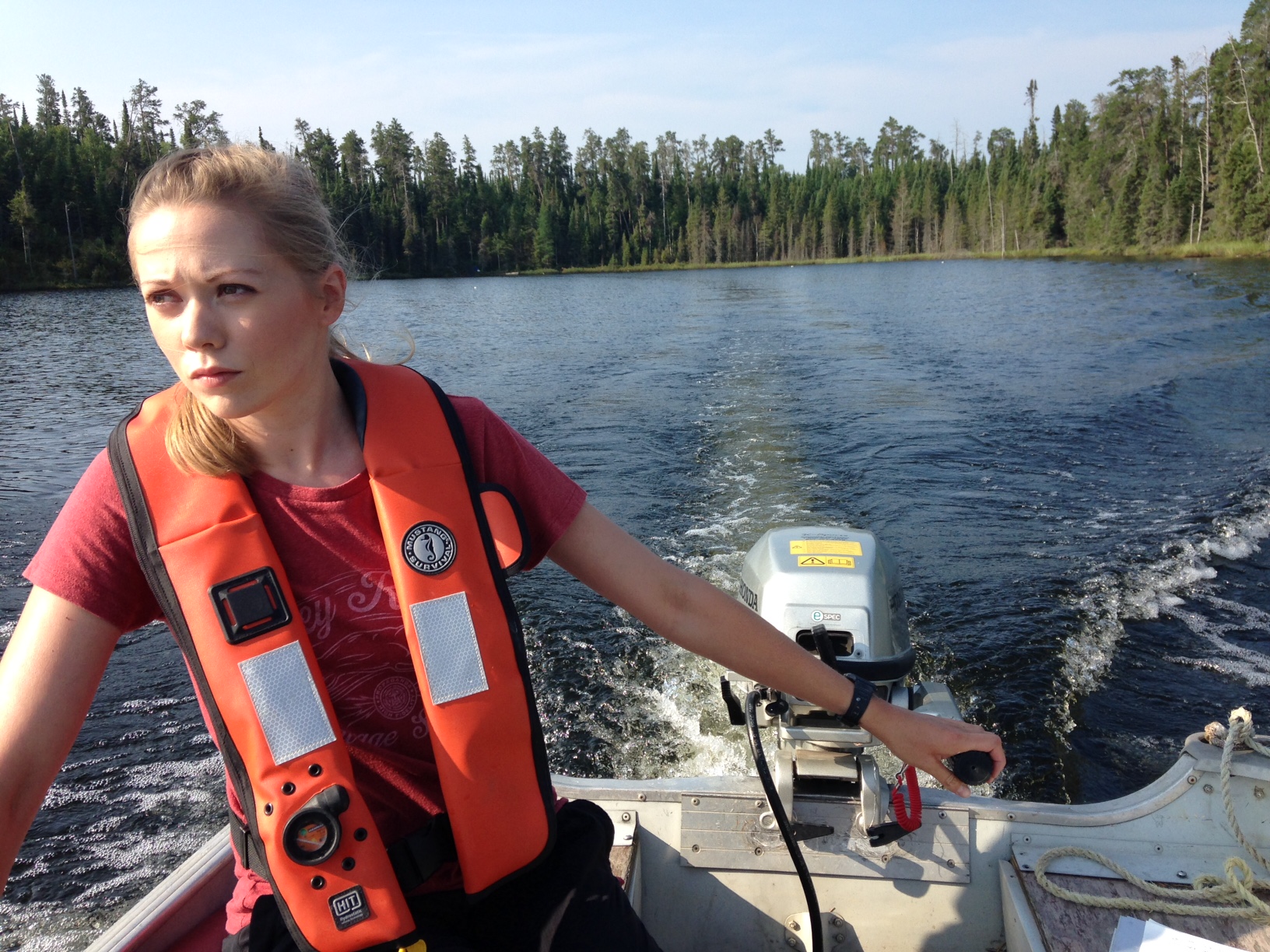
The day the government announced it was getting rid of the Experimental Lakes once and for all, Mike Rennie and his crew were packing the trucks to head out into the field for the day. It was about ten past eight when an e-mail came in, instructing everyone to be gathered for a call at 8:30. So that’s what they did.
The scientists knew that any call like this wasn’t going to be good, but no-one was expecting it would be this bad. Sitting around the table, their bosses back in the city told them that not only were their experiments being cancelled, but the facility was going to be closed down, the staff bought out or reassigned, the buildings threatened with being ploughed back into the bush.
The Experimental Lakes Area is famous now, but even in May of 2012, the general public had no idea they were there, even though they were superstars in the world of science. There is only one place like it in the world: an isolated region of entire lakes that scientists can experiment on, with acids and chemicals and substances.
Over the past fifty years, the research conducted there had affected the whole continent, if not the world. The work done at the Experimental Lakes led to international agreements and sweeping industrial regulations. Its research helped prove the existence of acid rain, and led the United States and Canada to change their laws to control it. It showed how phosphates in laundry detergents were turning lakes green with algae; and led governments around the world to restrict or ban them. It became one of the world’s best sources of data on freshwater lakes, in an era when fresh water is becoming the most valuable resource of all. And the Canadian government, which ran it, just kept trying to get rid of it.
On that morning in 2012, some scientists simply headed on their way into the field, dazed, because going out into the field is just they did. Others, like Rennie, a cheerful, bearded new dad, went to war. Like his colleagues, he’d been told they’d get fired on the spot if they spoke out personally, but they had allies. “We essentially left that meeting, got on our personal computers, and on our personal e-mails started raising alarm bells,” he said. Within hours, a bush-fire of protest had spread around the world.
Their boss, Mike Paterson, a patrician scientist and a twenty-year veteran of ELA, was on the way back to Winnipeg from the lakes’ field station, some four hours away, when the news hit. He pulled over on the side of the road to take the call from a colleague, and ploughed on to the city, where his bosses were based.
“I immediately ran into my director of science’s office and said, what the hell is going on?” He got the same message: The government was getting out. The Experimental Lakes might have changed the way the world handles its freshwater, but now, it was over.
**
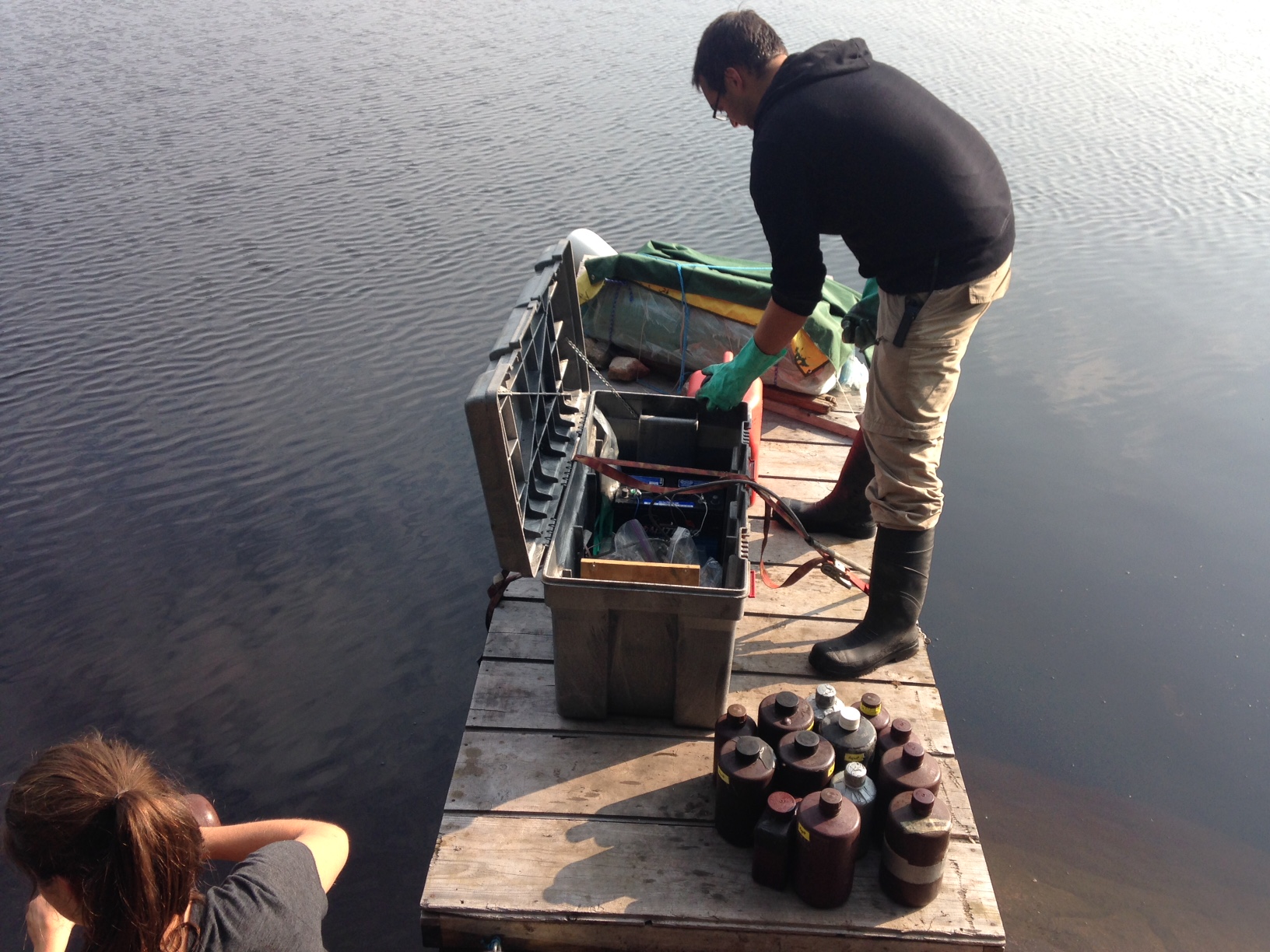
Two years later, on the edge of Lake 222.
“It’s so beautiful,” Andrea Conine says, rinsing the toxic bottles in the lake, and chucking them one at a time into the boat. She’s from New Hampshire, a slightly reserved PhD student, and now here she is, dosing a Canadian lake with silver particles. “Sometimes I look out and say, what are we doing?”
The contraption beside her rumbles to life, and under the dock, a plume of silver-brown muck blossoms into the water. “You have to do something out here in the lake to see what happens,” she says. “There’s just so many things you can’t control for in the lab.”
Her colleague, Graham Blakelock, a masters student who has an aggressive beard and a trucker hat and keeps insisting this place gives him “a boner for science,” spent the morning cooking the stuff up. This meant taking a little vial of silver powder and blending it with lakewater in a gigantic, precariously-mounted industrial mixer until it’s frothing with shiny bubbles, like someone made a milkshake out of a liquid Terminator.
This is nanosilver: tiny anti-bacterial particles that are going into more and more products, like gym clothes, where the silver particles prevent odours by killing microbes. But compounds that start in clothes don’t always stay in clothes. They come out in the wash, and nanosilver particles are ending up getting dumped into rivers and lakes. What happens to these particles after that, though, is a mystery. Do they just sink to the bottom? Do they kill the bacteria in the lake? Do they get eaten by tiny creatures, which are eaten by bigger creatures?
So for the past few years, a team from Trent University in Peterborough, Ontario has been trying to answer this question, by actually putting the nanosilver in the lake itself. They are, in a very literal sense, experimenting on a lake. It would be hard to do this anywhere else in the world: If government regulators didn’t cry blue murder, than cottagers would.
For decades, the Experimental Lakes Area was a secluded government research station, a sort of secret colony of scientists who, for a time, had wiggled free of the bureaucracy’s deadening grip. Founded in 1968, the 58 lakes are physically isolated from the outside world, hidden near the border between Ontario and Manitoba. Its founders, a team first put together in the early 1970s, conducted audacious studies that influenced the way entire continents handled their freshwater.
It was the ELA that proved that acid rain was harming real lakes, and they did it by actually adding sulphuric acid to a lake, and watching as lower rungs on the food chain died out, leaving fish malnourished and shrunken. Acid rain had become one of the most burning issues, as it were, of the late 1980s, and the ELA’s research strongly contributed to high-profile deals struck between Canada and the United States to control it.
Before that, in the 1970’s, it was the ELA that proved that phosphorus from detergents was turning the world’s freshwater lakes a toxic green – by adding phosphorus to turning one of its own lakes green with phosphorus-loving algae. (There was much debate over whether it was really phosphorus that was causing the blooms, or whether nitrogen was to blame. So the ELA partitioned off a lake, and boosted the phosphorus levels on one side – which promptly turned green.)
More recently, by adding a special, traceable form of mercury to a lake with a crop-dusting airplane, it proved that mercury was getting into fish from rainwater, and that expensive scrubbers on coal plants were worthwhile.
For all that, the experiments with real-world pollutants don’t poison the lakes irrevocably – the total mercury that was added in that experiment was about a teaspoon. Rather, the most of the experiments simply replicate the damage that’s done to real lakes in industrialized areas, and allow the researchers to watch closely as the lakes recover over a period of years.
What’s more, by spending decade after decade taking the measure of the lakes it wasn’t tampering with, it amassed an incredible store of data about what goes on in a pristine lake, and how they change from year to year.
To Mike Paterson, the place is like the uncle in a family that nobody knew much about until they died. “Then you go to the funeral, and you find out that they had all these incredible lives and done these amazing things. I feel like people only found out about ELA after we were dead – or, as it turns out, not quite dead.”
The Experimental Lakes Area is still there. In mid 2014, it took the unusual step of being taken over by a policy institute – the Winnipeg-based International Institute for Sustainable Development, while having its work bankrolled for the next five years by the Ontario government, which perhaps saw a way to make a statement about supporting science without spending too much money.
Paterson – a gregarious, bespectacled figure who works in a t-shirt, shorts, and socks pulled up – is still its chief scientist. But their future isn’t guaranteed just yet. ELA has a five year lease on life to find its footing in the non-profit world. That means doing things that even they’ve never done before.
**
There is a buzz around the camp this week is all about the kids coming on Friday. It used to be a relatively isolated government shop, but now it needs all the outreach it can get.
So, for the first time that anyone can recall, the elite science institution is opening its doors to real, actual kids, middle-schoolers from nearby Kenora, for a day of field-science lessons. By trade, the staff are scientists and not educators, and so there’s some trepidation on exactly how to do this. There are many meetings.
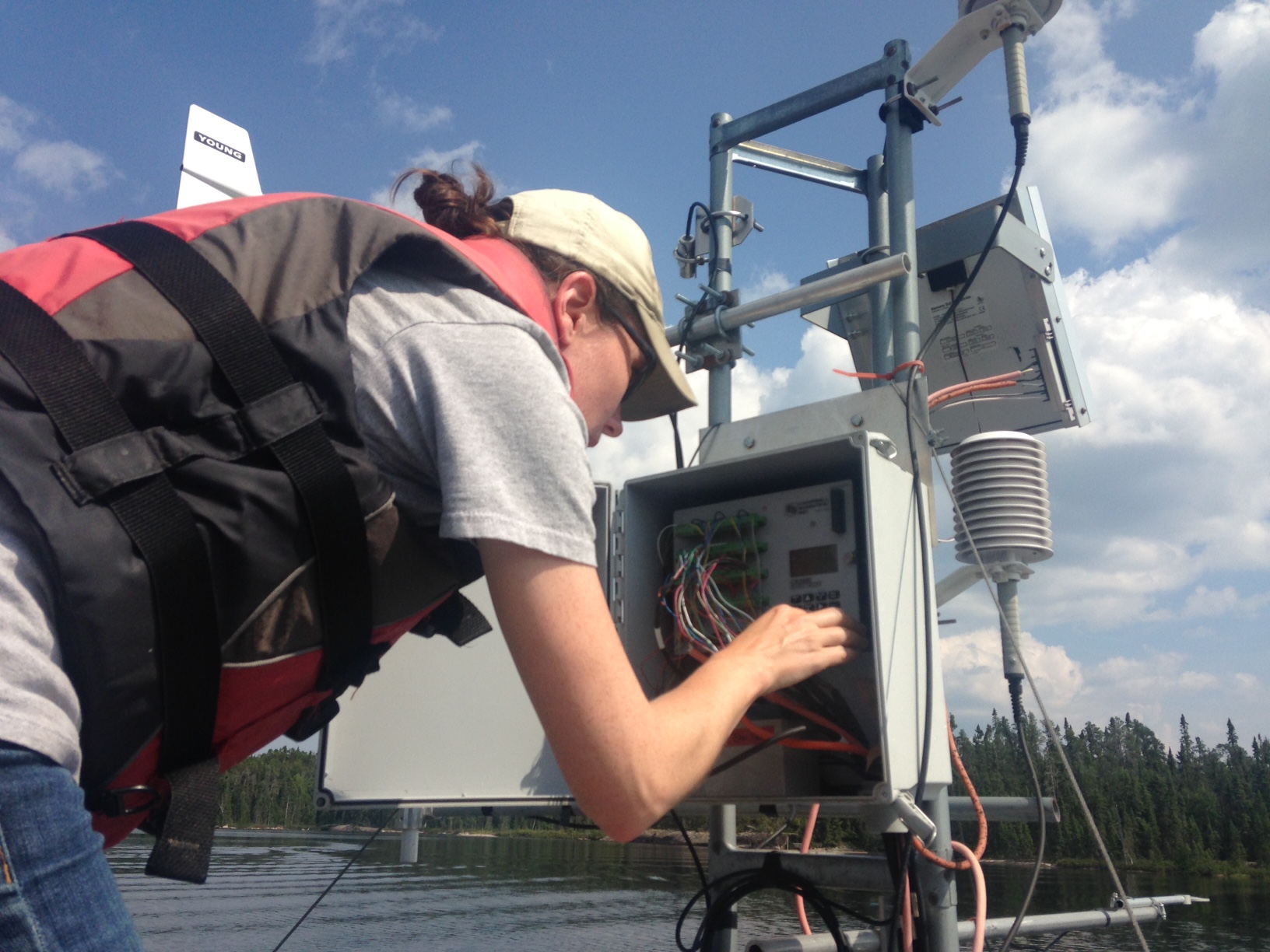
The long, winding road into ELA leads past a meteorological site full of oddball instruments – a big crystal ball that inscribes the arc of the sun; an assortment of slightly mystifying whirligigs – then past a big generator, a dozen ATVs in a neat row, to a little university campus deep in the woods: residences and laboratories, some of them gleaming new, the kind of place only a government would build and then try taking down.
Nobody here locks their doors. In the mornings, people make their beds and put little wooden chalks into their doorjambs, propping their room doors open. In fact, not much is locked at all – not the labs, not the trucks. The cafeteria hall door never shuts. At night, when the cook is asleep, scientists pad in and out the side door to raid the walk-in freezer and drink the fountain juice.
On Monday mornings, the place comes to life. The scientists want to show you what they do. In fact, they’re almost absurdly welcoming, like an isolated tribe of researchers that hasn’t yet learned to fully mistrust journalists. They want to bring you along, to throw you in their tin boats, to show you how to tie an “ELA knot” (an ingenious boat-hitching daisy-chain that no-one knows how to describe otherwise), to make you put on hip-waders and hold the net, to hold the water-level meter, to show you how the fish-tracking mechanisms work.
They are not big on titles, or even on last names. At breakfast, Chandra Rogers and Lee Hrenchuk, two the fish researchers, introduce themselves, waving across the table.
“We’re the fish people.”
Next to them, Lauren Hayhurst, an undergraduate from the University of Manitoba, nods.
“I’m the fish student.”
The fish people are close to ELA’s heart. Permanent staffers rather than visiting students, they keep track of the fish populations on both the lakes that are being manipulated, and the ones that are simply being closely observed. They go to enormous lengths to keep their fish alive – implanting $700 trackers in some, which keep pinging for years, measuring out their fish lives; putting little hole-punch nicks in the fins of others, and counting how many are caught again later.
Mike Rennie – the senior scientist amongst the fish people – says that it’s the very fact that they do the same thing year after year that makes their research so valuable.
“In a lot of these lakes, we’re noticing that lake trout are spawning two weeks later, on average,” says Rennie. “This is the thing with monitoring data: You don’t know it’s valuable until you’ve got 30 years of it.”
On this particular day, however, some fish will need to be sacrificed, dissected for a study on radioactivity; this is the fish people’s least-favourite thing. Most will die in the net, but the remainder need to be humanely dispatched by being thwacked on the head with a sawn-off foot-long steel pipe. It is the fish-thwacking pipe.
In the meantime, the day-to-day work of maintaining records of the lakes is all-consuming. Up and down the dozens of lakes, there are water-levels to be checked and instruments to be recalibrated by hand, and nick-finned fish to be caught in a seine net and measured on a Staples ruler. There is the lake whose outflow has been diverted by way of dynamite to check on, and the lake where a contractor is testing an insanely jury-rigged contraption that can, with computer-controlled accuracy, hydro-acoustically scan a lake for life that varies in size from plankton to pike.
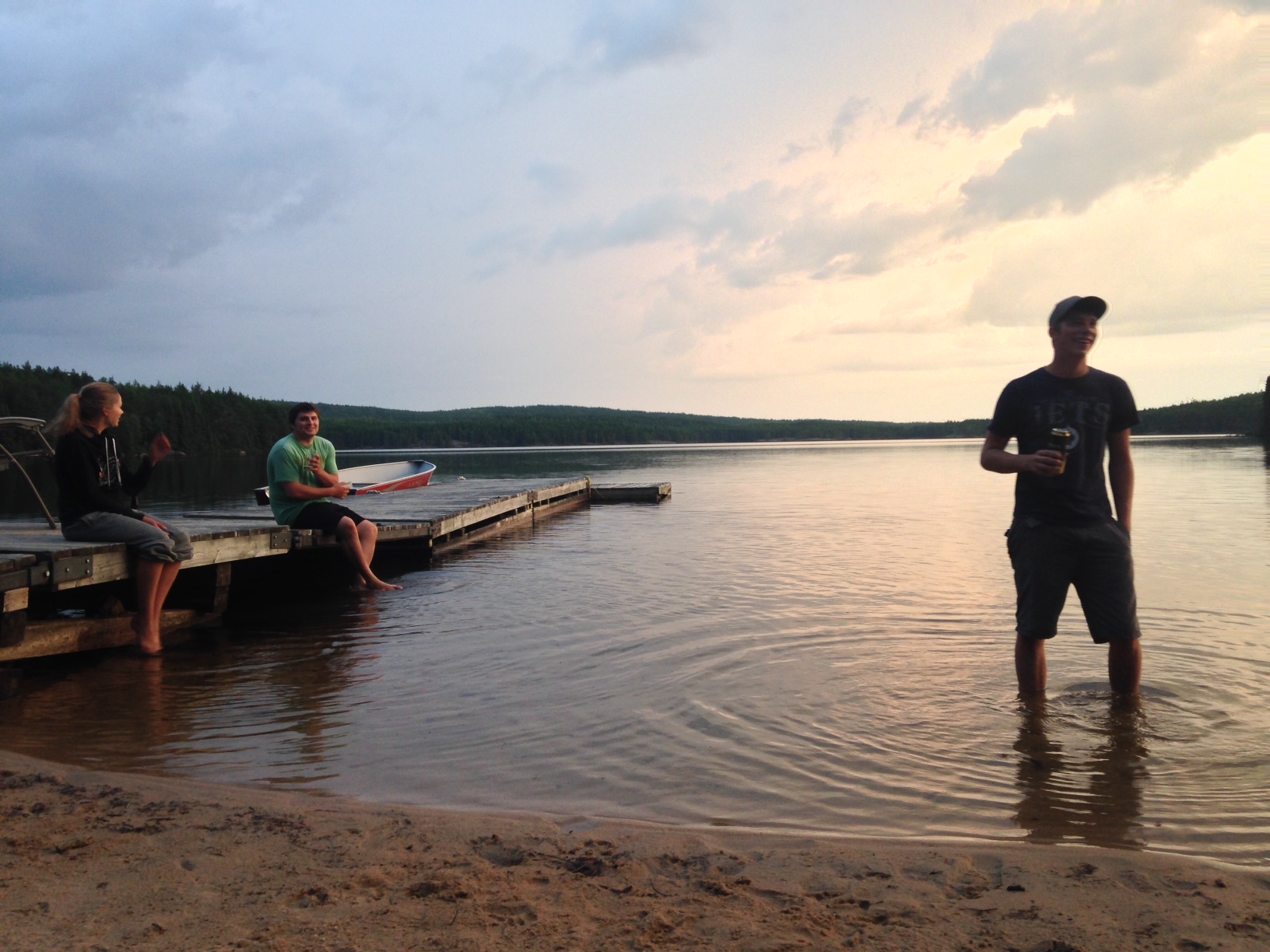
At night, the scientists sit by the campfire on Lake 240, they swim around the little island in the middle, they play UNO with tequila shots as stakes, they pad out to the labs to fetch pitchers of homemade beer that at least two of them are making, possibly with the help of laboratory equipment. They talk about research papers and date and occasionally fall in love. More than one described the place as “summer camp for scientists.”
The past lingers. On cabinet doors, scrapbook pictures of the hundreds of students who have come and gone over the years, fanning out across the country and the world. Scientists like giving each other awards, and they linger on mantlepieces and shelves long after their recipients and inventors are gone. On one shelf, The Platinum Sandbag (“I think she filled a lot of sandbags one year?”) On another, the Orange Ravishing World Championship, awarded in 1970, 1972, 1973, 1975, 1989, and 2013, at the variety show that caps off every season.
The next day, Andrea and Graham and the crew of nanosilver students are back. They’re a six-person crew from Trent University, in their mid-20’s, three girls, three guys. It’s easy to put silver into a lake, but harder to determine exactly where it ends up.
Science involves a lot of schlepping. The students cart the silver liquid in backpacks, twice a week, across the lakes – into one tin boat, across a hiking trail, into another tin boat, across another trail, into a third boat – until finally it reaches the little lake. Then it gets fed into a hand-made silver-dispensing machine – a hand-built assembly made of a solar panel, marine battery, household thermostat timer, pump, and gas tank that they didn’t have time to test before putting it out there.
And then there’s manner of sampling. Today they’re drawing from the lake bottom, looking for larger invertebrates. It means getting into hip-waders and doing what appears to be a frantic ritual dance, kicking muck from the bottom into a net, and then dredging it up. They call it “kick-netting,” as in “you are brutal with your kick-netting.”
The kick-netting dredges up all kinds of macroinvertebrae – terrifying, bitey dragonfly larvae, katydids, or at least the little cylindrical houses they build for themselves, and the occasional fleeing leech.
“Aw, he’s a pretty one.”
“What are we going to do with him?”
“Put him in a bag.”
“Sorry, leech.”
“If I was a bug, I would just run at the sight of scientists.”
Back in the lab later on, the muck is carefully pawed-through for insects and other large invertebrate, before being pressed through a fine sieve and put in bottles that will be analyzed back in the university lab in Peterborough. Everything is catalogued.
“What’s Latin for ‘leeches’?”
This leech, meanwhile, keeps knocking over its little canister, and making an escape attempt across the counter. Andrea crab-walks past, having flooded her hip-waders in the lake. Graham, who has been unenthusiastically cross-referencing journal citations in the adjoining office, emerges. “Hey, are you going to say that this place gives me a boner for science? That quote was gold.”
**
The Experimental Lakes Area is covered in little cairns and memorials. One, in a forest grove, marks the time, in the 80’s, when the place was burned to a cinder by forest fires – the scientists, according to legend, kept single-mindedly stopping at lakes along the escape route to take their measurements as they evacuated. Another sits at the top of a rise overlooking the site, where the scientists climb up to get a bar of cellphone reception, commemorating the most recent time the government tried to kill the place.
Why does the government keep trying to do away with the ELA? Surely it wasn’t the cost: The whole site runs on between $2 million and $3 million – by comparison, the Department of Fisheries and Oceans, the department that axed it, spends well over $1.5 billion a year. The attempted shutdown in 2012 became a media sensation, despite the fact that few Canadians had heard of the place. It quickly became a symbol what critics called the current Conservative government’s hostility towards science. The ELA, they argued, was coming up with inconvenient truths despite its tiny budget, and shutting it down sent a pro-business message to regulators and corporations alike.
The truth might be a bit more nuanced. The 2012 shutdown wasn’t actually the first try – previous governments, of different political stripes, had at various points in the 80’s and 90’s tried to shut ELA down as well.
In its way, ELA was always a rough fit with the government bureaucracy that ran it, which might explain how such a free-wheeling culture emerged at a government lab. Physically isolated from their minders for decades, it was a place where scientists could escape from the absurdities of bureaucracy and, if something needed to be done, simply go out and do it. “I guess I can say it now: I always thought ELA was an island of sanity in a sea of insanity,” says Mike Paterson, the chief scientist.
In later years, especially, there didn’t seem to be much love lost between the research institute and its cash-strapped departmental bosses, who were under increasing pressure to deliver industry-focused results. Paterson says that more than once, he was criticized for being a “cowboy.”
The station’s near-closure became a lightening rod for anti-government sentiment, but out at the field station, nobody seems entirely sure why the government tried thwacking them. “I never have really gotten a good explanation, and to be honest, I’ve given up even trying,” says Paterson. “The range of explanations vary from the lowest level to the highest level, and even given how close I am to this, I still don’t know.”
It could be that, rather than victims of a government conspiracy, ELA found itself at the confluence of simpler, duller enemies: A bureaucracy that it didn’t mesh with, and a government looking for easy savings and didn’t know what it was getting into by trying.
Around camp, there’s a good deal of optimism about IISD, the policy non-profit that’s taken on the ELA. Paterson argues there’s still a role for government-run science, but for now, the scientists seem to be enjoying freedom from its various miseries: the paperwork, the political pressure, the political isolation.
“We want this place to be a part of the community,” said Matt McCandless, the executive director of IISD-ELA, the non-profit’s point man for the lakes, as the vans full of schoolchildren rolled in. “The biggest message is that ELA is open for business. Everything is up and running.”
They’ve got five years to make sure it stays that way.
**
Like a forest after a fire’s been through, little green shoots of life are returning to the Experimental Lakes Area. The next morning, the middle-schoolers had arrived, and appeared to be having a good time, despite a slightly lumpy journey up the ELA’s hills and dales courtesy of a van driver who wasn’t used to them. The Experimental Lakes still aren’t really geared for the outside world.
Standing on a porch by a door to the chemistry building, Mike Rennie was holding court for a crowd of students.
“We’re going to be doing an activity called PONDERING LIFE. We’re going to take you down to the pond where we’ll – ”
Here, Mike Paterson burst through the door behind him, knocking him forward. “Oh! Sorry.”
Paterson scuppered off. Rennie continued.
“Who here has seen a dragonfly larva?” he said. Some had. “The cool thing about dragonfly larvae is that if you look at them closely, they don’t have gills. They bring water in through the abdomen – right in through their butts!”
“Whoaaaa!” said a kid.
Across the way, on the porch of the fish lab, a younger set of teachers were giving a basic lesson in fluid dynamics, including an illustration of the way that water layers of different temperatures don’t mix, and a lesson in mixing acids and bases. The kids, cheered and wide-eyed, shuffled off to the next station.
“Who had fun?” called out a scientist.
“I did!” said a young girl in a pink shirt, toddling off with her beaker full of tinted acid/base solution. “I might drink this.”
Three scientists yelled at once.
“DON’T DRINK THAT!”
The afternoon ended under northern Ontario’s deep-blue skies. The scientists piled into a shuttle van for their weekend in Winnipeg. Graham Blakelock packed up a truck with a canoe and a friend for a weekend camping trip around the isolation of the experimental lakes. He hadn’t been sure about pursuing another degree before coming out, but ELA was having the same effect on him as it had on so many before him. “If I could just do this for the rest of my life, I’d be very, very happy.”
A version of this article was published in Oak Street Magazine.
With many thanks to Guillaume Simoneau, for originating this project.
As 2009 winds down, the world of Facebook has fragmented into two camps: the people who are pretending to be farmers, and the rest, who are busy wishing a plague of locusts upon them.
The last few months have witnessed the meteoric rise of a new kind of online time-waster: Facebook games with names such as FarmVille, FishVille, Island Paradise and Cafe World that are calibrated not toward fun, but toward the recruiting of friends and the disgorging of credit card numbers. They propagate with an almost organic zeal – and they have tens of millions of customers to show for it. The question is: How can something so dreary have become so popular?
Really, the gameplay is so dull, it would be easy to write them off as diversions for the mildly concussed if it weren’t for the fact that 60 million people are playing FarmVille alone. That’s twice the population of Canada. I know kids who play. I know parents who play. I tried to order a beer last weekend, and the guy behind the bar was playing on the joint’s laptop.
The object of these games is to build something, be it a farm, a fish tank, or a crime family. This takes virtual money, and to get it players must perform repetitive tasks over a period of days. In FarmVille, by far the most popular of the lot, players must click and click to plow land, click and click to plant crops, and then, a day later, click and click and click to harvest the crops – and start again. It’s about as much fun as mowing the lawn.
All of this effort leads to the purchase of virtual goods. The ultimate goal of FarmVille is to buy virtual shrubs, virtual barns and virtual animals to adorn your virtual land.
It’s a lucky coincidence, then, that there’s another way to get ahead in imaginary farming. Instead of working the fields, players can pull out their credit cards – or, perhaps more to the point, wheedle access to their parents’ credit cards – and simply buy some virtual dollars in exchange for real ones. (Players are encouraged to part with $40 a pop.) Now, you might ask why anyone would want to buy a virtual pig.
First, remember that the act of shopping is its own reward. Second, consider that real pigs are oftentimes impractical. Third, and most important: When everyone else on the block has a virtual pig, you want one too.
In fact, these games make a lot more sense if you don’t think of them as games at all. They’re more like simple virtual worlds, where the fun part isn’t playing, but buying and selling. FarmVille and its clones aren’t video games, they’re toys: one part dollhouse and one part consumer fantasy.
And consumer fantasies are always better shared. FarmVille encourages players to check out their friends’ farms, making it an exercise in show and tell. Moreover, in order to progress to certain stages, players are actually required to have a certain number of Facebook friends who are also playing – effectively turning gamers into recruiters.
The company behind FarmVille (an immensely profitable outfit called Zynga) has made several games that all follow this formula; others have made their own knockoffs. In FishVille, the idea is to trick out a tank with ever-more exotic fish and corals. MafiaWars, a dude-oriented crime game, is more intricate and less visual, but the basic dynamic is the same.
To rope more people in, these games generate an astounding amount of noise in the social medium. Three or four times each session, they automatically attempt to post a message on the player’s Facebook feed.
The messages read like this: “Ivor has been rewarded for loving their fish!”
“Ivor and their mafia completed the Mugging job in Mafia Wars.”
“Ivor attained the level of Fancy Farmer in FarmVille!”
First off, nobody should ever be called a “Fancy Farmer.” Second, imagine these announcements pushed into someone else’s Facebook inbox, several times a day, times 60 million. It’s word-of-mouth, insofar as every player gets a tape deck shoved into their maw.
Zynga hasn’t resorted just to weapons of mass irritation. Earlier this year, its founder was infamously caught on tape at a conference explaining, that as an entrepreneur, he’d done “every horrible thing in the book, just to get revenues right away.” This included encouraging users to download hard-to-remove adware toolbars.
Until recently, his games also promised virtual cash in exchange for completing third-party bogus “IQ tests” and surveys that asked for players’ phone numbers – and then left charges on their phone bills. Zynga stopped these offers after a leading blog blew the whistle on what it called “ScamVille,” but the same entrepreneurial spirit is still at work.
So it is that, down home on the farm, we’re reminded that if you want to achieve success and popularity in this world, just work hard, get your hands dirty, and design an irritating product that will separate people from their friends and their money as expeditiously as possible. People will come flocking. A hailstorm might be too much to hope for.